

Post-Inflammatory Erythema (PIE): How to Get Rid of Red Marks After Breakouts
Post-inflammatory erythema (PIE) isn't a true scar — here's what causes it, how long it lasts, and the ingredients that visibly fade redness.
Author
askINKEY skincare advisor
Published
11 October, 2026
Time to read
5 minutes
You know the moment. A blemish finally calms down, the bump flattens out, and just when you think your skin is in the clear, you’re left staring at a flat red, pink, or purple mark exactly where it used to be. It doesn’t hurt. It isn’t raised. It just sits there, refusing to match the rest of your skin tone.
This is called post-inflammatory erythema, or PIE, and if you’re dealing with it right now, here’s the first thing worth knowing: it is extremely common, and it is not a scar in the way most people fear. PIE is treatable, predictable, and - with the right approach - temporary.
This guide walks through exactly what’s happening underneath the surface, how to tell PIE apart from its look-alike condition (post-inflammatory hyperpigmentation, or PIH), what actually speeds up or slows down fading, what a realistic timeline looks like, and which ingredients are genuinely backed by how skin heals. Then we’ll put it all together into a simple, repeatable routine.
No fear tactics. No vague promises. Just a clear explanation of what post-inflammatory erythema actually is and what works to fade it.
Understanding what’s actually happening biologically is what makes every recommendation in this guide make sense, so let’s start there.
What Is Post-Inflammatory Erythema? (And Why It’s Not a Scar)
Post-inflammatory erythema is the flat red, pink, or purple discolouration that lingers on the skin after a blemish has already healed. The bump is gone, there’s no active breakout, but the colour hasn’t faded yet. For anyone newly searching “pie acne” and trying to work out what’s happening to their skin, this is the simplest possible definition: PIE is leftover colour, not leftover damage.
That distinction matters more than it might seem. PIE is fundamentally a vascular response. It isn’t pigment, and it isn’t scar tissue. When a blemish forms, the skin mounts an inflammatory response, and part of that response involves increased blood flow to the area. Capillaries - the tiny blood vessels just beneath the skin’s surface - dilate to help deliver immune cells and support healing. That’s a normal, healthy process. The issue is that once the blemish itself has resolved, those capillaries don’t always snap back to their resting state immediately. Some take weeks. Some take months. While they’re still slightly dilated, that extra blood flow shows up visibly as a red, pink, or purple mark.
It can help to think of it the same way you’d think about a bruise. A bruise isn’t a wound in the traditional sense - the skin isn’t broken, there’s no structural damage - but the colour you see is blood vessels reacting to trauma, gradually settling back to normal as circulation stabilizes. PIE works on a similar principle, just triggered by inflammation rather than impact. The colour will fade as the vascular response calms down; it’s simply a slower process than most people expect it to be.
This is also the point where it’s worth clearly separating PIE from true acne scarring, sometimes referred to as atrophic or pitted scarring. True scarring involves actual structural change: a breakdown in collagen during the healing process that leaves a physical indent, a textural change you can feel with your fingertip, not just see. That kind of scarring generally does not respond to topical skincare alone, and treating it usually requires more intensive, in-office approaches. PIE, by contrast, has no textural component at all. The skin is smooth; only the colour is different. This is genuinely good news, because it means PIE is one of the more responsive, treatable post-blemish concerns you can address with a consistent skincare routine.
One more layer worth understanding early: PIE doesn’t look identical on every skin tone. On lighter and medium skin tones, it tends to present as a distinctly pink or red mark that’s easy to spot at a glance. On deeper skin tones, that same vascular response can appear more purple or brownish, which makes it visually harder to distinguish from pigment-based marks. That overlap is exactly why so many people get confused between two very different (but often co-occurring) conditions - which brings us to the comparison nearly everyone searching this topic actually needs.
A quick point of clarity before moving on: PIE is frequently, and understandably, confused with a visually similar but mechanically different concern called post-inflammatory hyperpigmentation. Telling the two apart is the single most useful thing you can do before choosing a routine, because while there’s crossover in good ingredients, the primary targets are different.
PIE vs PIH: How to Tell the Difference
If you’ve ever typed “pie vs pih” into a search bar at 11pm while examining your skin in a magnifying mirror, you’re in good company. These two conditions are so commonly confused that most people assume they’re the same thing with two names. They’re not, and the distinction is actually simple once you know what to look for.
Post-inflammatory erythema (PIE) is vascular. The colour comes from blood vessels near the surface of the skin, and it shows up as red, pink, or purple.
Post-inflammatory hyperpigmentation (PIH) is pigmentary. The colour comes from an overproduction of melanin in response to inflammation, and it shows up as brown or dark discolouration, with the exact shade depending on your natural skin tone.
Here’s what they have in common: both are completely flat. Neither one involves a raised texture, an indent, or any structural change to the skin. If you can’t feel a difference when you run a finger over the mark compared to surrounding skin, you’re very likely looking at PIE, PIH, or both - not true scarring.
So how do you actually tell them apart without a dermatologist’s loupe? There’s a simple, reliable method you can do right now, often called the blanch test:
- Press a fingertip gently onto the mark and hold for 2-3 seconds.
- Release and watch closely.
- If the mark visibly lightens under pressure and then returns to its red, pink, or purple colour once you release, that’s PIE - you’re temporarily compressing the blood vessels causing the colour.
- If the mark stays essentially the same shade whether you’re pressing on it or not, that’s PIH - pigment doesn’t respond to pressure the way blood flow does.
It’s worth being upfront about something many guides skip: it’s entirely normal to have both PIE and PIH at the same time, particularly if you’ve dealt with breakouts over a longer period or have experienced several blemishes in the same area. Skin that has been through repeated inflammation can show a combination of vascular and pigmentary responses simultaneously, which is one reason some marks look stubbornly two-toned, part red, part brown.
Skin tone also plays a meaningful role in how visible and how mixed these marks appear. In lighter and medium skin tones, PIE tends to read as clearly red or pink, making it easy to identify on sight. In deeper skin tones, that same vascular redness can take on a more brownish-purple quality, overlapping visually with PIH enough that the blanch test becomes genuinely useful rather than just confirmatory. Knowing which one (or both) you’re dealing with isn’t just academic. It directly shapes which ingredients should lead your routine, which we’ll get into shortly.
Once you know what you’re actually looking at, the next logical question is why it happened in the first place, and more importantly, what determines how quickly it clears.
What Causes PIE - and What Affects How Fast It Fades
Every case of post-inflammatory redness starts the same way: with inflammation. When a blemish forms, whether it’s a small whitehead or a deeper, more painful cystic spot, the skin triggers an inflammatory cascade that dilates the surrounding capillaries. The more inflamed and deeper the blemish, the more pronounced the resulting vascular response tends to be. This is simply cause and effect; it’s not a sign that something unusual or wrong is happening in your skin.
One of the most significant (and most within your control) contributing factors is picking or squeezing. It’s worth saying plainly and without judgment: everyone has done it. But mechanically disrupting a blemish while it’s inflamed intensifies the body’s inflammatory response and can physically damage the capillaries themselves, which tends to deepen and prolong the resulting PIE. This isn’t about shame or willpower; it’s simply useful information, because avoiding this one habit is genuinely one of the highest-leverage changes you can make.
Some skin types are simply more prone to visible, longer-lasting PIE. If you have rosacea-prone skin, or skin that’s generally reactive and quick to flush or flare, you may notice that your post-blemish redness is more pronounced and slower to fade than it is for others. This isn’t a flaw in your skin; it just means your baseline vascular reactivity is a little higher, and your routine may need to lean more heavily on calming, barrier-supportive ingredients.
Beyond the initial cause, several variables determine how quickly any individual mark will fade:
- Daily SPF use - unprotected UV exposure is one of the most significant factors slowing PIE fading (more on this below).
- Consistency of ingredient application - sporadic use of redness-targeting ingredients produces sporadic, hard-to-notice results.
- Avoiding known triggers - UV, excess heat, alcohol-based products, and continued picking all prolong the vascular response.
- Age and depth of the mark - newer, shallower marks generally resolve faster than older, deeper ones.
- Skin tone and overlap with PIH - mixed PIE/PIH marks often take a little longer to look fully resolved because two separate mechanisms need to calm down.
Of all of these, UV exposure deserves to be singled out as the single biggest obstacle to fading. Sunlight further dilates blood vessels and can intensify the appearance of both PIE and any overlapping pigmentation, effectively undoing progress that would otherwise be happening. This is precisely why daily SPF 30 broad-spectrum protection isn’t a “nice to have” in a PIE routine; it’s foundational. Think of it less as an extra step and more as the thing that protects every other step from being wasted.
Heat is a related, if shorter-term, aggravator. Hot showers, saunas, and intense exercise all cause temporary flushing and vasodilation, which can make PIE look more pronounced in the moment, even if it doesn’t cause lasting setbacks the way chronic sun exposure does. Similarly, over-exfoliating or introducing too many active ingredients at once is a common and avoidable pitfall; irritated skin produces more inflammation, not less, which can work directly against the fading process you’re trying to support.
None of this is meant to feel like a list of rules you’re breaking. Think of it instead as a list of levers you can pull. Every one of these factors is something you have some degree of influence over, and that’s genuinely empowering information once you know how to use it. With the causes and controllable variables clear, the next natural question is the one almost everyone searching this topic really wants answered: how long is this actually going to take?
How Long Does Post-Inflammatory Erythema Last? Realistic Timelines
Here’s the direct answer, because vague reassurance isn’t useful when you’re staring at a mark in the mirror every morning: post-inflammatory erythema is not permanent for most people, but it is also not instant. Without consistent use of the right ingredients and daily SPF, fading can realistically take many months, sometimes longer, because the vascular response is simply left to resolve on its own timeline rather than being actively supported.
With that said, here’s what a genuinely realistic fading window looks like, broken into three tiers depending on severity and how long the mark has been present:
- Mild PIE: 4-8 weeks. Lighter, more recent marks from smaller or less inflamed blemishes tend to respond fastest to a consistent routine.
- Moderate PIE: 8-12 weeks. More noticeable redness, often from deeper or more inflamed breakouts, generally needs a longer runway of consistent treatment.
- Persistent or older PIE: 3-6 months. Marks that have been present for a long time, or that sit on reactive/rosacea-prone skin, typically take the longest to visibly resolve.
A useful pattern to understand in advance: early, subtle improvement often starts to show around the 4-6 week mark, but the kind of change you’d actually notice in a side-by-side photo usually isn’t apparent until somewhere between 8 and 12 weeks of genuine, daily consistency. That gap between “early improvement” and “visible improvement” is exactly where most people lose confidence in a routine that is, in fact, working exactly as expected.
This is worth repeating because it’s one of the most common and avoidable mistakes in treating PIE: judging results too early. Checking in at one or two weeks and concluding that a product “isn’t working” is like judging a marathon time at the first mile marker. Vascular healing simply operates on a longer cycle than most people expect, and abandoning a routine at the two-week mark is one of the single biggest reasons people end up cycling through products without ever giving one a fair, full-length trial.
It’s also worth briefly acknowledging the edge cases. If you’re dealing with long-standing rosacea, years of unprotected sun exposure, or PIE that genuinely hasn’t shifted after several months of consistent, correct use, that’s a reasonable point to loop in a dermatologist for a more personalized assessment. That’s not a failure of your routine; it’s simply recognizing when a more tailored, in-person evaluation adds value beyond what skincare alone can offer.
With honest expectations set, it’s time to move from “what to expect” into “what to actually use” - the ingredient science that makes fading possible in the first place.
The Best Ingredients for Fading Red Marks After Acne
This is the part of the guide where theory becomes action. Each of the ingredients below has a specific, explainable mechanism relevant to PIE, and understanding why each one works will make it much easier to build a routine that actually makes sense for your skin rather than one assembled from guesswork.
Azelaic acid is the hero ingredient of this entire guide, and for good reason. It has a dual action that’s unusually well-suited to PIE specifically: it’s anti-inflammatory, which directly addresses the vascular root cause of the redness, and it’s also antimicrobial, which helps manage the breakouts that cause PIE in the first place. It’s also notably well-tolerated by sensitive and rosacea-prone skin, which matters enormously given how often those skin types show more pronounced PIE. The 10% Azelaic Acid Serum for Redness Relief ($27.00 CAD) is formulated specifically to target this kind of vascular redness, making it the logical starting point for almost anyone working through this guide.
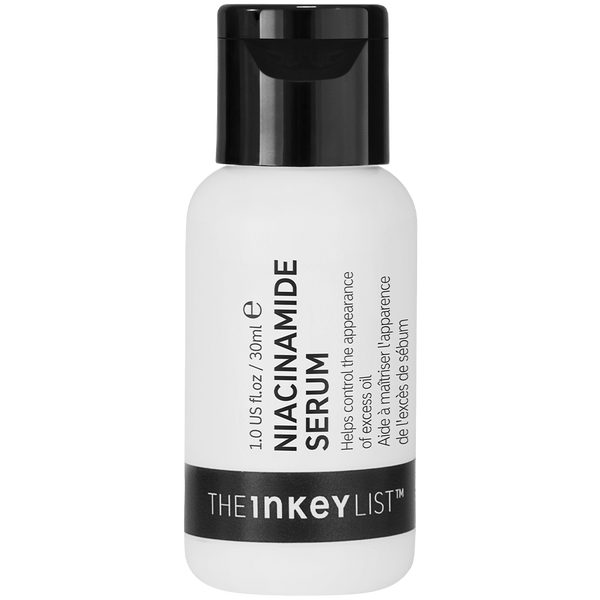
Niacinamide works as the ideal companion to azelaic acid rather than a duplicate of it. Its mechanism is slightly different: it calms inflammation broadly while also supporting and strengthening the skin’s barrier. A stronger barrier means skin is generally less reactive and better equipped to handle other active ingredients without becoming irritated, which indirectly supports faster, smoother fading. The 10% Niacinamide Serum ($18.00 CAD) is designed to be layered easily alongside other actives, making it a daily staple rather than an occasional treatment.
Daily SPF deserves its place here as a non-negotiable, even though it isn’t a serum you’re choosing between formulas for. As covered earlier, UV exposure dilates capillaries and actively works against everything else in your routine. Daily SPF 30 broad-spectrum protection isn’t an optional finishing touch; it’s the step that protects the progress every other ingredient on this list is working to create.
Vitamin C earns its place as an antioxidant defence layer, best used in the morning alongside SPF. Its role is to help neutralize oxidative stress caused by UV and environmental exposure throughout the day, which complements SPF’s protective function rather than replacing it. The 15% Vitamin C + EGF Serum ($27.00 CAD) fits neatly into an AM routine for exactly this purpose.
Tranexamic acid is the ingredient to reach for specifically if you’re dealing with overlapping PIE and PIH, meaning both red and brown marks are present at once. It’s particularly effective for pigment-related concerns, making it a useful addition when the picture isn’t purely vascular. The Tranexamic Acid Serum ($26.00 CAD) is positioned for exactly this mixed-concern scenario.
Glycolic acid plays a supporting, rather than leading, role in a PIE routine. As an exfoliating acid, it accelerates cell turnover, which can help surface-level marks fade a little faster by encouraging the skin to renew more efficiently. It isn’t the ingredient doing the heavy lifting on the vascular side of PIE, but it’s a genuinely useful supporting player a few times a week. The 10% Glycolic Acid Toner ($24.50 CAD) is suited to this kind of 2-3x weekly supporting use.
Retinol is best thought of as the long game. It’s not a direct, targeted PIE treatment, but it supports overall skin renewal, clarity, and texture over time, which contributes to healthier-looking skin generally and can help prevent the kind of deeper, more inflamed breakouts that lead to more pronounced PIE in the first place. For anyone newer to retinol, the Starter Retinol Serum ($20.00 CAD) is formulated as a gentle, lower-barrier entry point.
Understanding each ingredient on its own is useful, but skincare only actually works when it’s organized into a routine you’ll genuinely stick to every day. That’s exactly what comes next.
Your Step-by-Step Routine for Treating Red Marks After Acne
If you’ve read this far wondering specifically how to get rid of red marks on your face without overcomplicating your routine, this is the section built for you. The goal here isn’t to use every product mentioned above at once; it’s to build something sustainable, scannable, and easy to actually follow.
The Foundation Routine (Start Here)
If you’re new to treating PIE, or your skin tends to be reactive or easily irritated, start simple:
- Morning and night: Azelaic Acid Serum + Niacinamide Serum.
- Every morning, without exception: daily SPF 30 broad-spectrum protection.
That’s it. Two targeted actives and one protective step is a genuinely sufficient starting routine, and it’s far better to be fully consistent with two products than inconsistent with six.
Full AM Routine
- Cleanse with a gentle, non-stripping cleanser.
- Apply 10% Azelaic Acid Serum for Redness Relief to target redness directly.
- Optional: layer 15% Vitamin C + EGF Serum for antioxidant support.
- Apply 10% Niacinamide Serum to calm and support the barrier.
- Moisturize.
- Finish with daily SPF 30 broad-spectrum protection, every single morning.
Full PM Routine
- Cleanse (consider a double cleanse if you’re managing active breakouts alongside PIE).
- Alternate nights between Azelaic Acid and either Glycolic Acid Toner or Retinol, rather than layering all three together.
- Apply 10% Niacinamide Serum to calm the skin before bed.
- Moisturize to lock everything in overnight.
For the first cleanse step, the Oat Cleansing Balm ($23.00 CAD) is a gentle option suited to most skin types, including sensitive or reactive skin dealing with pronounced PIE.
Treating Active Breakouts Alongside PIE
A common misconception is that you need to wait until a breakout fully clears before starting to treat the resulting marks. You don’t. These processes can run in parallel. If you’re managing both active blemishes and existing PIE, the Salicylic Acid Cleanser ($20.00 CAD) is well-suited to oily or blemish-prone skin as a daily cleansing step that addresses current breakouts while your redness-targeting serums work on existing marks.
And for the active spots themselves, rather than picking (which, as covered earlier, actively worsens PIE), reach for Hydrocolloid Invisible Patches ($13.50 CAD). They protect the area physically, absorb excess fluid, and remove the temptation to touch or squeeze, which directly supports faster, cleaner healing.
If You Have Both PIE and PIH
For readers dealing with a true mixed picture of red and brown marks, add Tranexamic Acid Serum as your primary treatment step, layering 10% Niacinamide Serum afterward to support and calm the skin as it works.
Common Mistakes Worth Avoiding
- Introducing too many active ingredients at once, which increases irritation rather than speeding up results.
- Judging progress too early, before the 8-12 week mark where visible change typically becomes apparent.
- Inconsistent SPF use, which undermines every other active ingredient in the routine.
- Picking at marks, which reactivates and prolongs the inflammatory response.
- Cleansing with hot water, which causes temporary but avoidable flushing and irritation.
Conclusion: PIE Is Temporary, and the Right Routine Makes the Difference
Post-inflammatory erythema can feel like a frustrating, lingering reminder of a breakout you thought you’d already dealt with, but it’s worth returning to the central fact from the start of this guide: PIE is a vascular response, not a permanent scar, and it’s one of the more genuinely treatable post-blemish concerns out there. Unlike structural scarring, there’s no physical damage to reverse, just a healing process that benefits from the right support.
Three things make the biggest difference, and none of them are complicated. Azelaic acid targets the vascular inflammation at the root of the redness. Niacinamide calms the skin daily and strengthens the barrier so everything else works better. Daily SPF protects that progress from being undone by UV exposure, which remains the single biggest obstacle to fading. Everything else in this guide (vitamin C, tranexamic acid, glycolic acid, retinol) adds refinement for specific situations, but these three are the non-negotiables.
If there’s one mindset shift worth taking away from this guide, it’s patience paired with consistency. Give a routine a genuine 8-week minimum before judging whether it’s working. Vascular healing simply doesn’t happen on a two-week timeline, and the people who see the clearest results are rarely the ones with the most complicated routines; they’re the ones who stuck with a simple one, every day, without skipping SPF.
You don’t need more red acne scars anxiety, more products, or more guesswork. You need clarity on what’s actually happening in your skin and a routine built around ingredients that address it directly. That’s genuinely all this comes down to.
If you’re ready to start, the simplest entry point is the one this whole guide points back to: shop 10% Azelaic Acid Serum for Redness Relief and shop 10% Niacinamide Serum, use them morning and night, protect your progress with daily SPF, and give your skin the time it genuinely needs to show you what it can do.
Frequently Asked Questions

Got a question?
Our askINKEY team are a friendly bunch of skincare experts with deep product knowledge and zero judgement. Whether you're an ingredient obsessive or just starting out, we'll make it make sense. No question too big. No question too small. We Give A Care, Every Day.


