



Can You Use Azelaic Acid with Retinol?
Can you use azelaic acid with retinol? Yes. Split them across your day, azelaic acid in the morning and retinol at night, for comfortable, even-toned skin.
Author
askINKEY skincare advisor
Published
17 October, 2026
Time to read
10 minutes
Yes, you can use azelaic acid and retinol as part of the same skincare routine. The short answer to the question “can you use azelaic acid with retinol” is that these two ingredients get along perfectly well, but they tend to do their best work when you use them at different times of day rather than layering them together in one step. The simplest approach is azelaic acid in the morning and retinol at night.
Here is where a lot of the confusion comes from. There is a stubborn myth floating around that “actives can’t mix,” which leads some people to avoid using these ingredients entirely. On the other end, there are people who pile everything on at once, apply azelaic acid and retinol back to back in the same evening, and then wonder why their skin feels dry, tight, or a little sensitive. Neither extreme is necessary. The truth sits comfortably in the middle.
Azelaic acid is the quiet multitasker of the skincare world. It is known for calming the look of redness, fading the appearance of post-blemish marks, and helping to even out an uneven skin tone. Retinol, meanwhile, is one of the most researched ingredients in all of skincare, prized for supporting skin renewal and smoothing the look of texture and fine lines. They are not competing for the same job, which is exactly why they can live in the same routine so happily.
In this guide, we will walk through the science behind both ingredients in plain language, explain the simple AM and PM method that keeps your skin comfortable, give you a step-by-step routine you can follow tonight, show you how to tailor it to your skin type, and answer the questions people ask most. If you only want the short version, the quick-answer box below is written exactly for that.
Quick Answer: Can You Use Azelaic Acid and Retinol Together?
Azelaic acid and retinol can both be used in the same skincare routine. The general guidance is to apply azelaic acid in the morning and retinol at night, rather than layering them in the same step.
The reason is simple. Both are active ingredients, and stacking two strong actives in a single application can be more than your skin barrier needs to process at once. For some people, especially those newer to actives, that can mean dryness, tightness, or a bit of irritation. Splitting them across your day sidesteps that problem.
There is a bonus to this split, too. When each ingredient gets its own slot, it can focus on what it does best without competing for absorption. Azelaic acid can quietly work on redness and tone during the day, and retinol can get on with renewal and the look of fine lines overnight. That is the whole idea behind a well-built azelaic acid retinol routine.
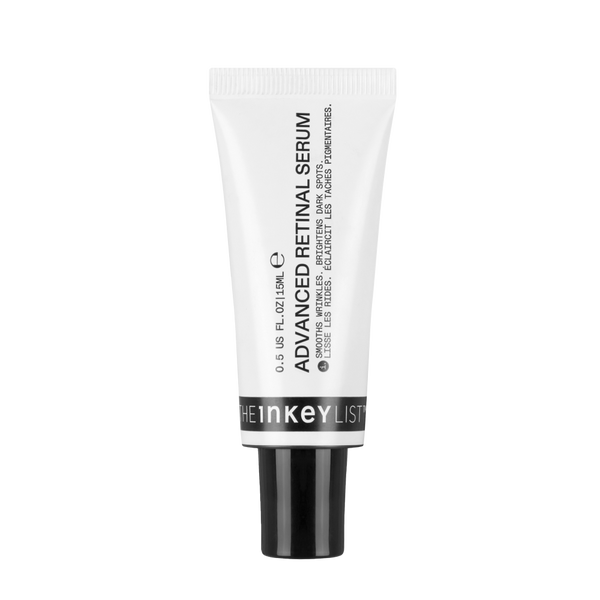
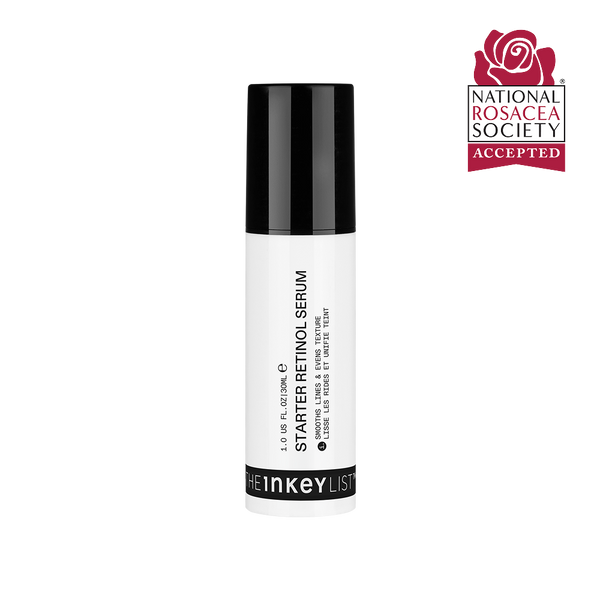
A good place to start your morning is our 10% Azelaic Acid Serum for Redness Relief, and a sensible place to start your evening is the gentle Starter Retinol Serum. If you are already comfortable with retinoids and want to step things up, the Advanced Retinal Serum is the natural next move.
One honest caveat: this is general guidance, and everyone’s skin tolerance is different. Starting slowly always matters. Now let’s look at what each ingredient actually does, so the “why” behind this advice makes sense.
What Azelaic Acid and Retinol Actually Do for Your Skin
Before you build a routine around two ingredients, it helps to understand what each one is bringing to the table. Good skincare is far easier to get right when you know why you are reaching for a particular bottle, and this is where a little knowledge saves you a lot of guesswork.
Let’s start with azelaic acid. Despite the word “acid” in its name, it is one of the gentler and more well-tolerated multitaskers you can add to a routine. It is best known for three things: calming the look of redness, helping to fade the appearance of post-blemish marks, and supporting a more even overall skin tone. That combination makes it a favourite for people with sensitive or blemish-prone skin who want results without the harshness that word “acid” sometimes implies. Our 10% Azelaic Acid Serum for Redness Relief delivers it at a clinically relevant concentration, which matters because an ingredient can only do its job if it is present in a meaningful amount.
Now, retinol. This is a vitamin A derivative, and it is one of the most studied ingredients in all of skincare, with decades of research behind it. Retinol supports your skin’s natural renewal process, which over time helps smooth the look of texture and soften the appearance of fine lines. It is the ingredient people most often think of when they picture “anti-ageing,” though a better way to describe it is a renewal ingredient that helps your skin look fresher and more refined.
Retinol is not a quick fix. It is a long game, and the people who see the best results are the ones who are patient and consistent.
Here is an important distinction that trips a lot of people up. There is a difference between a gentle starter retinol and a more advanced retinal, and understanding it helps you pick the right entry point. The Starter Retinol Serum is designed as an ease-in option for anyone newer to this family of ingredients. It lets your skin get acquainted with retinol gradually. The Advanced Retinal Serum, formulated at 0.05% Retinal in our Canada range, is the step-up option for people who are already comfortable with retinoids and ready for something stronger. Think of them as two rungs on the same ladder rather than two completely different products.
So why does the AM and PM split make so much sense once you understand what each ingredient does? Because they are working on different layers of a skin concern. Azelaic acid is focused on tone, redness, and the marks left behind after break outs. Retinol is focused on renewal and the visible signs of ageing. When you give each one its own time slot, neither has to compete for absorption, and your moisture barrier is not asked to process two heavy-hitting actives in a single sitting.
There is also a practical, sunlight-driven reason for the split. Retinol can increase your skin’s sensitivity to the sun, which is a big part of why it belongs in your evening routine. Azelaic acid, by contrast, is gentle enough for daytime use, sitting happily under your morning SPF. The timing is not arbitrary; it follows the way each ingredient behaves.
If your skin leans oily or blemish-prone, you might also consider a supporting cast member. Our Niacinamide Serum is a useful partner for oil control and the look of pores, and it layers comfortably alongside azelaic acid without adding harshness. It is an optional addition, not a requirement, but it is worth knowing it exists.
This approach, clinically backed concentrations explained in plain language at an honest price, is the whole philosophy behind how we build products. You should not need a chemistry degree to understand your own skincare. Now that you know what each ingredient does, let’s tackle the question everyone really wants answered: why not just use them both at once?
Why Azelaic Acid and Retinol Work Best Apart, Not Layered
If both ingredients are gentle enough for sensitive skin and genuinely effective, the obvious question is why you can’t simply apply them one after the other and be done with it. It is a fair question, and the answer is more about comfort and optimisation than about any kind of chemical clash.
Here is the key idea: azelaic acid and retinol are both active and effective on their own. Each one asks something of your skin. Azelaic acid is working on tone and redness, retinol is driving renewal, and both are prompting your skin to do a little extra. When you stack two actives in a single application, you are essentially asking your skin barrier to process two demanding ingredients at exactly the same moment. For many people, especially those still building tolerance, that is simply more than the barrier needs in one go.
What does “too much” actually look like in real life? It is rarely dramatic. More often it shows up as dryness, a feeling of tightness, some flaking around the areas where you applied the most product, or a general sense that your skin is more reactive and sensitive than usual. These are your skin’s way of saying it is being asked to do too much, too fast. The good news is that they are easy to avoid and easy to reverse.
It is worth being very clear about something here, because fear-based skincare advice is everywhere and it is unhelpful. Azelaic acid and retinol are not “incompatible.” Using them in the same routine is not dangerous. This is not a warning; it is an optimisation tip. The AM and PM split exists because it is the most comfortable and most effective way to get the benefits of both, not because something bad happens if you don’t follow it to the letter.
The fix could not be simpler:
- Azelaic acid in the morning, paired with SPF, so it can work on redness and tone during the day.
- Retinol at night, applied as part of your evening routine before moisturiser, so it can support renewal while you sleep and away from the sun.
That is genuinely the whole method. Two ingredients, two time slots, no overlap.
This logic is worth internalising because it applies far beyond this one pairing. If you ever find yourself wondering how to use azelaic acid and retinol together, or how to combine almost any strong active with retinol, the same principle holds: give each active its own time to work rather than crowding them into one application. It is a rule of thumb that will serve you well across your entire routine, not just these two products.
For anyone who wants to build tolerance slowly and gently, there is an easy on-ramp. Start with the Starter Retinol Serum just two to three nights a week before increasing frequency. Once your skin is comfortable at that pace, you can build up, and eventually progress to the Advanced Retinal Serum if you want something stronger. There is no prize for rushing.
You can also make the whole experience more comfortable with a little support. A hydrating step like our Hyaluronic Acid Serum acts as a cushion that can be layered with either active, and a barrier-supporting cream such as the Bio-Active Ceramide Moisturizer helps keep your skin resilient as you introduce new ingredients. Think of these as the supporting cast that lets the star ingredients shine without drama.
With the reasoning sorted, let’s get practical and actually build the routine, step by step, so you know exactly what to reach for and when.
How to Build Your AM and PM Routine (Step-by-Step)
Theory is useful, but what you really want is a routine you can follow tonight. Here is a clear, simple structure for both your morning and your evening, built around azelaic acid and retinol, with a few supporting steps that make everything work more comfortably.
Your morning (AM) routine
- Cleanse. Start with a clean base so the rest of your products can absorb properly.
- Apply azelaic acid. Smooth on your 10% Azelaic Acid Serum for Redness Relief ($27.00 CAD) to target redness and support an even tone through the day.
- Add a hydrating step if needed. If your skin wants a little extra moisture, layer our Hyaluronic Acid Serum($18.00 CAD) on top.
- Finish with SPF. This is non-negotiable. Seal everything with a broad-spectrum SPF every morning. Daytime protection is what allows all of your other ingredients to actually deliver.
Your evening (PM) routine
- Cleanse. Remove the day, your SPF, and any build-up before you apply actives.
- Apply retinol. If you are new to it, ease in with the gentle Starter Retinol Serum ($20.00 CAD) just a few nights a week. If you are already comfortable with retinoids, step up to the Advanced Retinal Serum ($30.00 CAD, 0.05% Retinal).
- Lock in moisture. Follow with the Bio-Active Ceramide Moisturizer ($30.00 CAD) to support your barrier overnight. This step is especially important on retinol nights.
That is your complete azelaic acid retinol routine, split cleanly across the day. It looks almost too simple, and that is the point. Effective skincare is rarely about adding more; it is about choosing the right ingredients and using them in the right order.
Start low, go slow, and let consistency do the heavy lifting. Your skin responds to patience far better than it responds to pressure.
A few ground rules make a big difference when you are starting out. First, patch test any new active before you apply it to your whole face. A small amount on the inner arm or along the jaw for a day or two tells you a lot. Second, introduce one new active at a time. If you start azelaic acid and retinol on the very same day and something feels off, you won’t know which one to adjust. Bring one in, let your skin settle, then add the next.
Third, and this is the one people most want to skip, give it time. Both azelaic acid and retinol reward consistency measured in weeks, not days. You will not wake up transformed after one night. You will, however, notice gradual, steady improvement if you keep going. That slow build is exactly how real results happen.
On frequency, the two ingredients behave a little differently. Azelaic acid can typically be used every day, morning after morning, without issue for most people. Retinol is better eased in gradually. Begin with the gentle Starter Retinol Serum a few nights a week, build up as your skin grows comfortable, and only then consider progressing to the Advanced Retinal Serum. This progression, from starter to advanced, is how you get the benefits of a stronger retinoid without the discomfort of jumping in too fast.
Once you have the general structure down, you can fine-tune it to suit your particular skin. Let’s look at how the routine shifts depending on your skin type and main concern.
Tailoring the Routine to Your Skin Type and Concern
No two complexions are identical, and the beauty of a flexible routine is that the same two hero ingredients can be adapted to suit very different needs. The structure stays the same; you simply adjust the supporting steps and the pace. Here is how to make this routine genuinely yours.
If your skin leans oily or blemish-prone, the goal is to manage oil and the look of pores without stripping your skin, because stripped skin often overcompensates by producing even more oil. Keep azelaic acid in your morning routine, paired with a lightweight hydrator so you stay comfortable without feeling heavy. On the evenings when you are not using retinol, consider working in our Niacinamide Serum, which supports oil control and helps with the appearance of pores and black heads. Alternating a niacinamide-led evening with your retinol nights gives your skin variety and keeps things balanced.
If your skin leans dry or sensitive, hydration and barrier support become your priority. Both azelaic acid and retinol can absolutely work for you, but they deserve a cushioned environment. Layer in the Hyaluronic Acid Serum for a hydration boost, and lean on the Bio-Active Ceramide Moisturizer to keep your barrier resilient. Most importantly, ease into retinol slowly with the gentle Starter Retinol Serum. For dry or reactive skin, the “start slow” advice is not optional; it is the whole game.
Start slow, your skin will thank you.
If your main concern is uneven tone or post-blemish marks, this is azelaic acid’s moment to truly shine. Its talent for calming the look of redness and evening out tone is exactly what you want here, and consistency is the secret. Used every single morning, our 10% Azelaic Acid Serum for Redness Relief works steadily on the marks and uneven patches that linger after break outs. You won’t see it happen overnight, but over several weeks of daily use, the cumulative effect is what delivers.
If you are focused on fine lines and the early signs of ageing, your PM retinol step is doing the heavy lifting. This is where the renewal benefits matter most. Start with the Starter Retinol Serum to build tolerance, and once your skin is ready, step up to the Advanced Retinal Serum for a stronger renewal effect. Always pair your retinol with the barrier-supporting Bio-Active Ceramide Moisturizer, because supported skin tolerates active ingredients far better and shows better results over time.
A word of reassurance to wrap this up. These are starting points, not rigid rules carved in stone. Skin needs and tolerance vary from person to person, and even from season to season. If your skin leans dry in winter and more balanced in summer, your routine can flex with it. Pay attention to how your skin feels and responds, and treat these guidelines as a sensible framework rather than a strict prescription. You know your skin better than any chart ever could.
With your routine personalised, it is worth spending a moment on the small missteps that catch almost everyone out, regardless of skin type. Avoiding these is often the difference between a routine that works and one that frustrates.
Common Mistakes to Avoid When Combining Actives
Even a perfectly chosen routine can be undermined by a few easy-to-make errors. The encouraging news is that these mistakes are common, completely fixable, and usually the result of enthusiasm rather than carelessness. Spotting them early will save you weeks of frustration and keep your skin comfortable while you build your routine.
Mistake 1: Applying azelaic acid and retinol in the same routine. This is the big one, and it is the whole reason this guide exists. Layering both actives in a single session, usually in the evening, is the fastest way to overwhelm your barrier. The fix is the AM and PM split we have come back to throughout: azelaic acid in the morning, retinol at night. Give each ingredient its own time slot and the problem simply disappears.
Mistake 2: Introducing retinol too quickly. There is a real temptation to go straight to nightly use, or to start with the strongest product available, in the hope of faster results. Skin rarely cooperates with that plan. Rushing retinol tends to produce dryness and irritation rather than quicker progress. Ease in with the gentle Starter Retinol Serum a few nights a week and build from there. Slow is smooth, and smooth is fast.
Mistake 3: Skipping SPF in the morning. This one quietly sabotages everything. Both azelaic acid and retinol are working to improve tone and renew your skin, and daily sun exposure without protection works directly against those goals. Skipping SPF undermines the very results you are putting in the effort to achieve, and it matters even more because retinol can increase sun sensitivity. Finish every morning with a broad-spectrum SPF. It is the step that protects your investment in every other product.
Mistake 4: Skipping moisturiser after retinol. Retinol asks something of your skin, and the least you can do in return is support it overnight. Leaving the barrier unsupported after your retinol step can leave your skin feeling dry and more reactive by morning. A nourishing finish like the Bio-Active Ceramide Moisturizer keeps the barrier supported while you sleep, which both improves comfort and helps your skin tolerate retinol better long term.
Mistake 5: Not patch testing new actives. It takes a day or two and almost no effort, yet it is the step people most often skip. For anyone with reactive or sensitive-feeling skin, patch testing a new active before full-face use is simply good sense. A small patch on the inner arm or jawline tells you whether your skin is happy before you commit.
Notice the thread running through all five of these: respect for your skin barrier. That is the quiet principle behind everything we have covered. Clear guidance, proven ingredients, and real results do not come from rushing or from piling on more products. They come from using the right ingredients, in the right order, at a pace your skin can handle. Protect the barrier, and the results follow.
Final Thoughts: Building a Routine That Works for Your Skin
If you take one thing away from this guide, let it be this: azelaic acid and retinol can both help your skin look healthier, more even, and smoother, and the easiest way to enjoy the benefits of both is to use them on an AM and PM split. Azelaic acid in the morning for redness and tone, retinol at night for renewal. That is the entire method, and it really is that simple.
It is worth repeating, because the skincare world so often suggests otherwise, that good skincare is not about owning more products or building more complicated routines. It is about consistency and the right order. A handful of proven ingredients, used thoughtfully and regularly, will always outperform a crowded shelf used haphazardly. The goal is a routine you can actually stick to, because consistency is where the real results live.
That is the philosophy behind everything we make: clear guidance, proven ingredients, and real results, delivered through simple, honest routines at a price that makes sense. You should understand exactly what you are putting on your skin and why, and you should never feel talked down to in the process.
So start slowly. Ease in with a gentle Starter Retinol Serum, listen to what your skin is telling you, and build up at a pace that feels comfortable. Pair it with a daily 10% Azelaic Acid Serum for Redness Relief, and when you are ready for more, the Advanced Retinal Serum will be waiting as your next step. There is no rush, and there is no wrong pace as long as it is the right one for you.
Ready to Build Your Routine?
When you are ready to get started, take a moment to explore the 10% Azelaic Acid Serum for Redness Relief, the Starter Retinol Serum, and the Advanced Retinal Serum to find the fit that suits your routine and your skin. If either ingredient is new to you, begin with one active at a time, start with the gentle Starter Retinol Serum, and let your skin adjust before you build further. Your routine should work with your skin, not against it, and the best first step is simply to begin.
Frequently Asked Questions

Got a question?
Our askINKEY team are a friendly bunch of skincare experts with deep product knowledge and zero judgement. Whether you're an ingredient obsessive or just starting out, we'll make it make sense. No question too big. No question too small. We Give A Care, Every Day.


